Service & After-Hours Support
(864) 299-1821

SOLUTIONS / MONORAIL & JIB SYSTEMS
FLEXIBLE LIFTING WHERE THE WORK HAPPENS
Monorail, jib and workstation crane systems provide targeted lifting and material movement exactly where your operation needs it, helping improve workflow, ergonomics and productivity without requiring full-facility crane coverage.
MONORAIL SYSTEMS
Efficient material movement along defined production and process paths.
JIB CRANES
Localized lifting around machines, work cells and loading areas.
WORKSTATION SYSTEMS
Lightweight ergonomic lifting for production and assembly environments.
CUSTOM CONFIGURATIONS
Systems designed around your facility, workflow and application.
FLEXIBLE MATERIAL MOVEMENT
PUT LIFTING CAPABILITY EXACTLY WHERE YOU NEED IT
Not every material handling application requires a full bridge crane system. Monorail, jib and workstation cranes provide focused lifting coverage that can improve material flow, reduce manual handling and bring lifting capability directly to the point of work.
HSI works with your team to understand the load, required coverage, surrounding equipment, building structure and production workflow, then helps configure a system that fits the application without adding unnecessary complexity.
✓
Designed around the actual work area and material path
✓
Freestanding and structure-supported configurations
✓
Installation and long-term service from one experienced team
MONORAIL & JIB SYSTEM CAPABILITIES
FLEXIBLE SYSTEMS FOR TARGETED MATERIAL MOVEMENT
From simple workstation lifting to monorail systems that move loads through multiple stages of production, HSI can configure equipment around the way material needs to move through your facility.
01
MONORAIL SYSTEMS
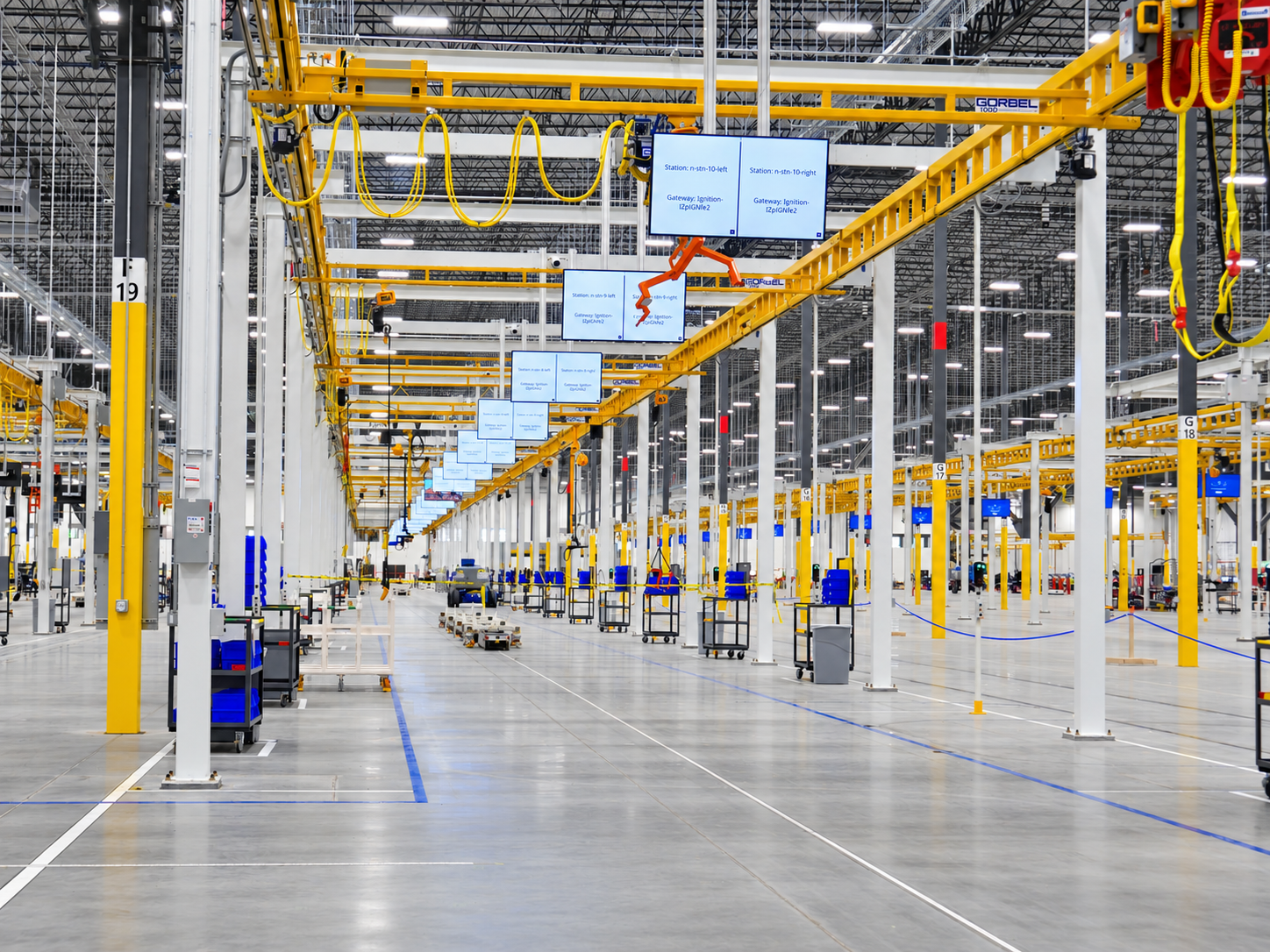
Monorail systems provide efficient overhead movement along a defined path, making them ideal for applications where material repeatedly travels between specific production, assembly or processing areas.
•
Straight and curved track configurations
•
Suspended and freestanding systems
•
Manual and powered travel options
02
FREESTANDING JIB CRANES
Freestanding jib cranes provide localized lifting coverage without relying on the building structure, making them a flexible option for individual workstations, machines and production areas.
•
Floor-mounted configurations
•
Multiple capacities and boom lengths
•
Work-cell and machine-loading applications
03
WALL-MOUNTED JIB CRANES
Wall-mounted jib cranes provide efficient lifting coverage while minimizing floor obstruction by using suitable columns or building structure for support.
•
Wall and column-mounted configurations
•
Compact workstation coverage
•
Manual or powered rotation options
04
WORKSTATION CRANE SYSTEMS
Lightweight workstation crane systems make frequent lifting and positioning easier while helping reduce repetitive manual handling in production and assembly environments.
•
Enclosed-track systems
•
Freestanding configurations
•
Ergonomic material handling applications
05
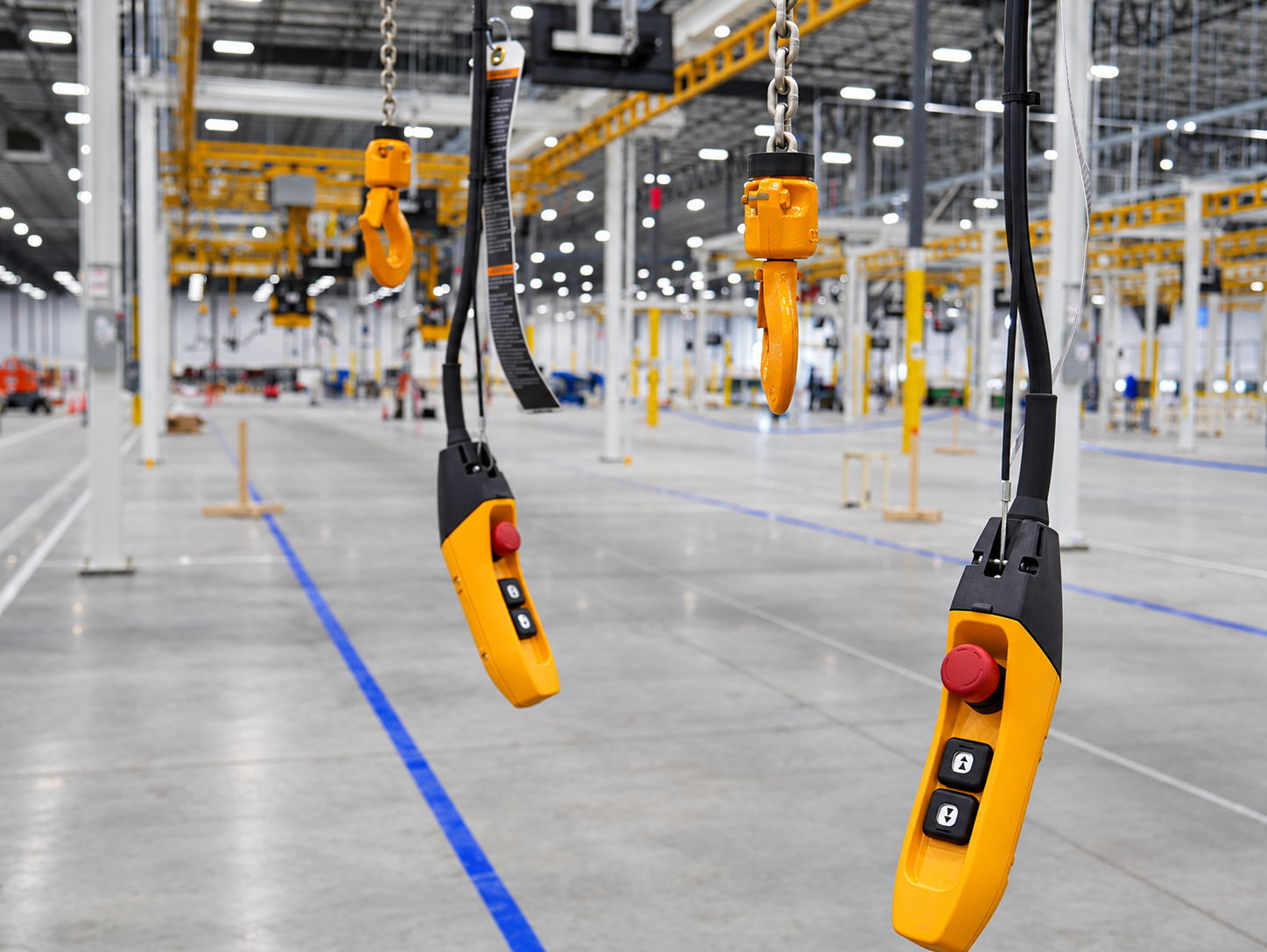
HOISTS & TROLLEYS
The right hoist and trolley configuration brings reliable lifting and travel capability to monorail, jib and workstation systems across a wide range of applications.
•
Electric chain hoists
•
Manual lifting options
•
Powered and manual trolley configurations
06
CUSTOM CONFIGURATIONS
When a standard monorail or jib arrangement cannot meet the application, HSI can develop a configuration around unusual layouts, production processes and facility constraints.
•
Application-specific engineering
•
Custom support structures
•
Integrated lifting system design
ENGINEERED FOR THE APPLICATION
THE BEST SYSTEM STARTS WITH HOW THE WORK ACTUALLY MOVES
Choosing the right monorail, jib or workstation system requires more than selecting a capacity. Coverage, travel path, support structure, operator movement and surrounding equipment all affect how the system should be configured.
HSI evaluates the complete application so the finished system supports efficient material movement, safe operation and the day-to-day workflow of the people using it.
DISCUSS YOUR APPLICATION →01
COVERAGE AREA
The locations where loads must be picked up, moved and positioned determine the type and amount of lifting coverage the system needs to provide.
02
LOAD CAPACITY
The weight of the load, lifting devices and required safety factors determine the equipment capacity and structural requirements of the system.
03
TRAVEL PATH
How material needs to move through the operation influences track layout, crane rotation, trolley travel and the overall system configuration.
04
SUPPORT STRUCTURE
Building steel, columns, floor conditions and available mounting locations help determine whether the system should be suspended, wall-mounted or freestanding.
05
ERGONOMICS & WORKFLOW
Operator movement, repetitive lifting and the relationship between workstations should be considered so the system improves the process instead of getting in the way.
06
CONTROLS & OPERATION
Manual, pendant, radio and powered movement options can be selected based on load characteristics, operator needs and the required level of control.
07
FACILITY CONSTRAINTS
Ceiling height, surrounding equipment, utilities, obstructions and available floor space can all influence the final layout and equipment selection.
08
FUTURE REQUIREMENTS
Considering potential production changes, additional workstations and future capacity requirements can help ensure the system remains useful as the operation evolves.
INSTALLATION & LIFECYCLE SERVICE
SUPPORT THAT CONTINUES AFTER INSTALLATION
A monorail, jib or workstation crane system is a long-term part of your operation. Proper installation, inspection and maintenance are essential to keeping that equipment safe, reliable and available when your team needs it.
HSI supports lifting systems throughout their service life, giving you access to installation, inspection, maintenance, repair, testing, parts and modernization through one experienced material handling team.
•
Installation
•
Inspections
•
Preventive Maintenance
•
Repairs
•
Load Testing
•
Parts & Upgrades
CHOOSING THE RIGHT CONFIGURATION
MATCH THE LIFTING SYSTEM TO HOW THE MATERIAL ACTUALLY MOVES
Monorail, jib and workstation systems solve different movement patterns. The right choice depends on where the load starts, where it needs to go, how often it moves, and how operators interact with it throughout the work cycle.
01
DEFINED PATH BETWEEN WORK AREAS
When material repeatedly travels along a predictable route between stations or process areas, a monorail system can provide efficient overhead movement without unnecessary coverage elsewhere.
02
LOCALIZED LIFTING AROUND A WORKSTATION
When lifting is concentrated around a machine, loading point, or individual work area, a jib crane can provide useful radial coverage while keeping the system focused on that specific task.
03
FREQUENT HANDLING ACROSS A WORK CELL
When operators need smooth, repetitive lifting and positioning across an assembly or production cell, a workstation crane system can support ergonomic movement with flexible point-of-use coverage.
LET’S TALK ABOUT YOUR APPLICATION
NEED A LIFTING SYSTEM THAT FITS YOUR WORKFLOW?
Tell us what needs to be lifted, where it needs to move and how your operation works. HSI can help determine the monorail, jib or workstation system that makes sense for your facility and application.